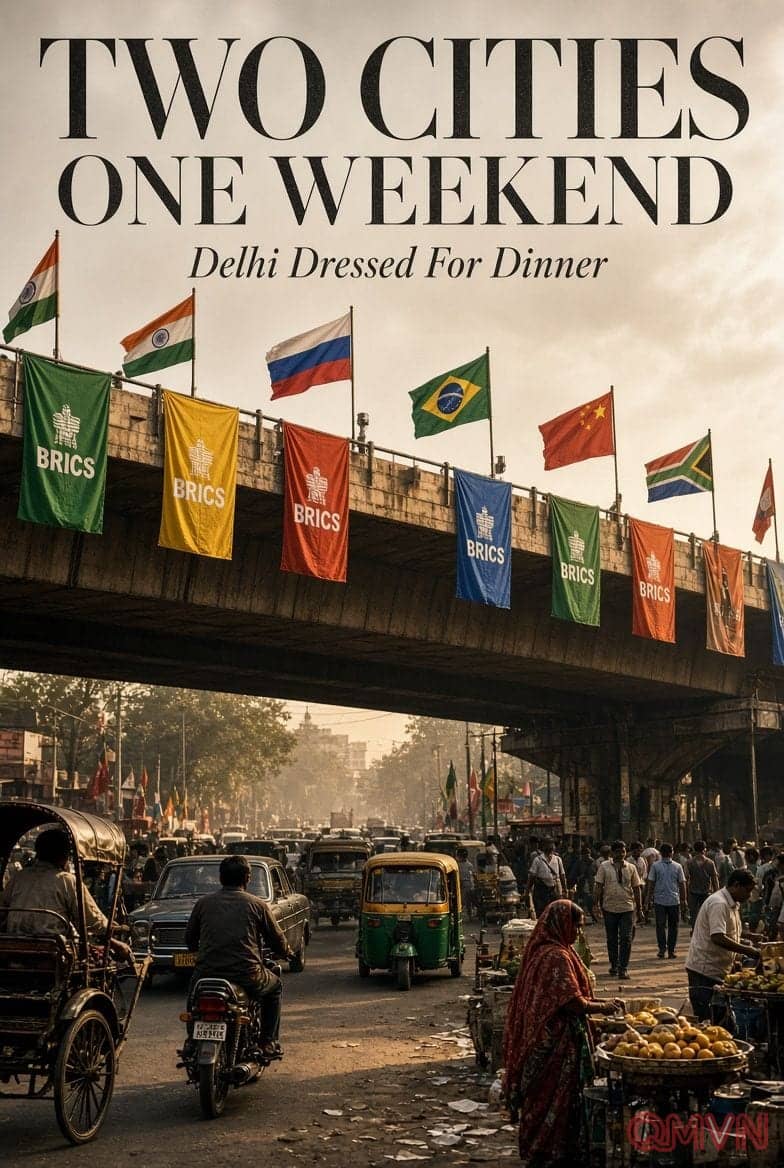
A capital with two faces
For anyone who grew up in Delhi, the contrast is familiar. There is the Delhi of narrow roads, crowded traffic, rubbish by the pavement and dust that enters the breath. There is also the Delhi of Lutyens, with tree-lined avenues, high-walled bungalows and carefully maintained corridors of power. When the world came for BRICS, the second face was brought forward: banners hung from flyovers, flags appeared, and the old Pragati Maidan was framed by the glass and steel of Bharat Mandapam.
Preparing a city for an international gathering is necessary. Security, traffic, interpretation, media centres and hospitality infrastructure are all part of organisational capacity. But the cost of beautification is often distributed unevenly. When a route is reserved for a motorcade, workers, taxi drivers and residents may wait longer. The phrase “traffic regulation” sounds neutral, but from a hot, wet pavement it often means being stopped. A successful summit needs more than attractive images for cameras; it should also minimise burdens on ordinary daily life.
A city is judged not only by how it receives dignitaries, but by how it treats those waiting outside the barriers.