A prize for a fundamental chemical puzzle
On October 7, the Royal Swedish Academy of Sciences named Henri B. Kagan and Kenso Soai as the 2026 Chemistry Nobel laureates. Its citation recognized discoveries of nonlinear effects and autocatalysis in asymmetric organic synthesis. The two will share 12 million Swedish kronor, with the presentation scheduled for Stockholm on December 10.
Born in Hiroshima, Soai is now professor emeritus at Tokyo University of Science. He said he was shopping near home when the Nobel news reached him. At a subsequent news conference, he expressed gratitude to faculty members, students and fellow researchers. His experiments had involved uncertainty, he explained, but the excitement of finding something new sustained his curiosity.
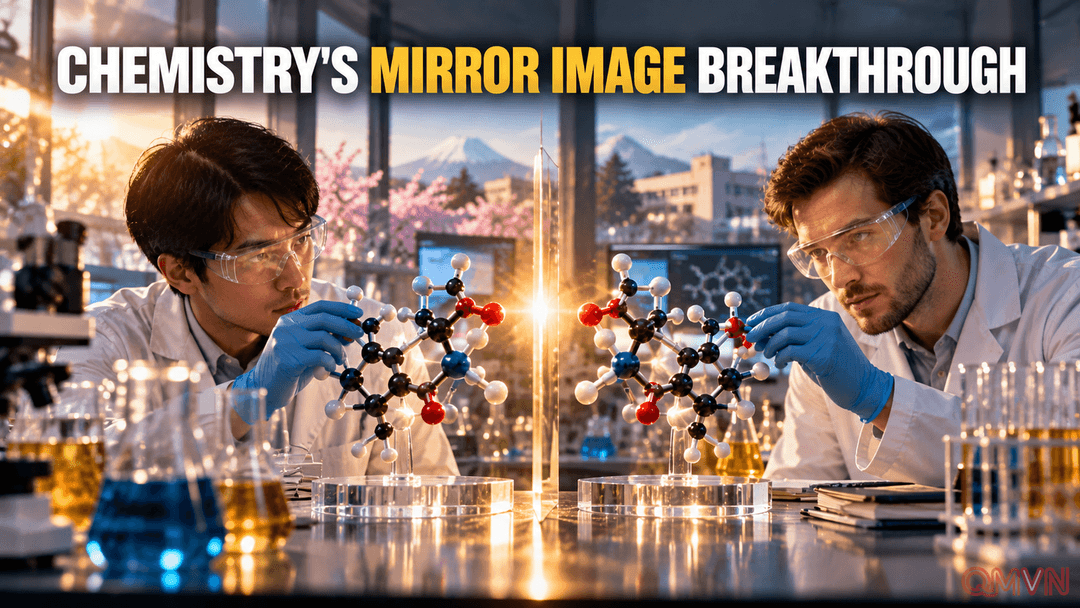
His fellow laureate, French chemist Kagan, helped develop the field of asymmetric catalysis. Their achievements followed different paths and emerged in different periods, but they addressed the same large question: how a chemical process can preferentially produce one of two molecules that are mirror images of each other.
Why left and right matter to molecules
A left hand and a right hand look alike in a mirror, yet cannot be superimposed perfectly. Chemists call this characteristic chirality.