Better homework, worse exams
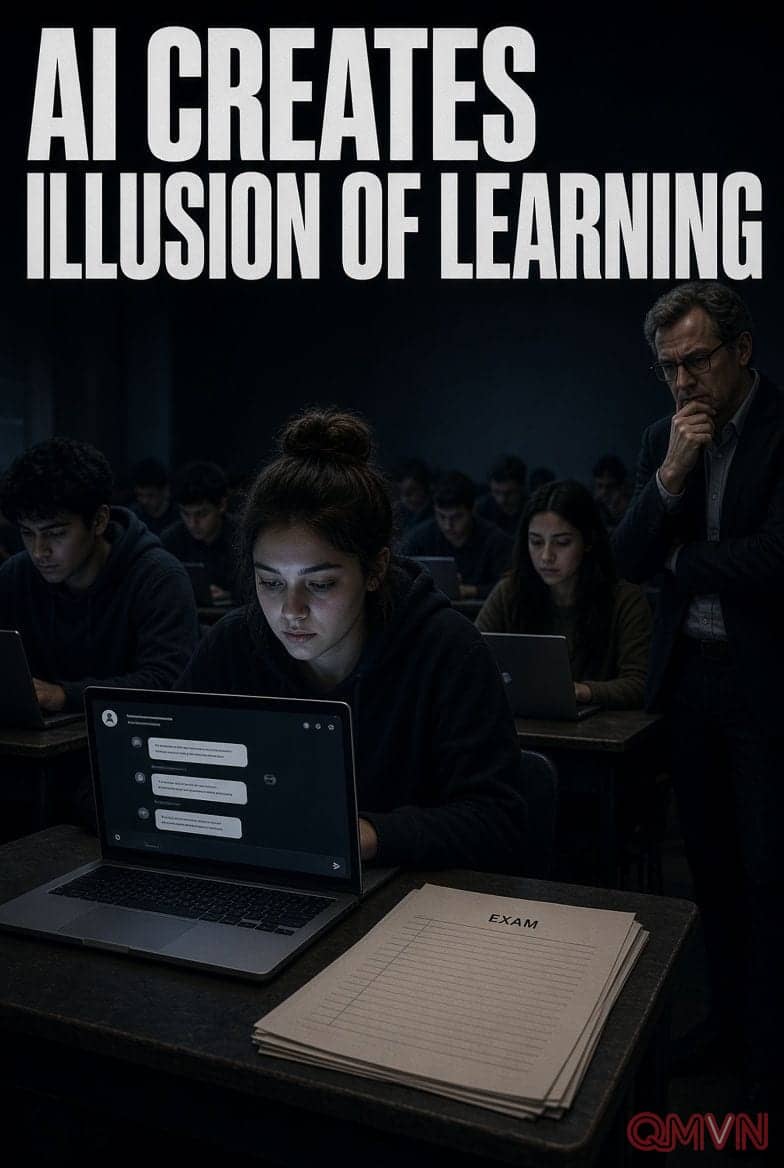
Eric Klopfer, an MIT professor who co-chaired a committee studying AI in teaching, learning and research training, told The Washington Post that in many cases students' homework has clearly improved, while their exam results have declined. When they must apply knowledge without the help of a large language model, they often falter.
“It's the illusion of learning.” — Eric Klopfer
The committee's final report, released on August 13, 2026, warns of “cognitive surrender,” in which students turn to AI at the first sign of difficulty. It concluded that overreliance on chatbots can reduce critical thinking, weaken memory, erode confidence and hinder mastery. MIT's president called it a watershed moment for higher education, and the committee recommended that every class have a clear AI policy and that instructors assess the learning process rather than just the finished product.
Early scientific evidence
According to Luca Cian, a professor at the University of Virginia's business school, virtually every student uses AI, and researchers are racing to understand behaviors that have already become the default. He notes that people remember less when information is easy to find through search engines or GPS maps, and that large language models may be the most powerful tool for “cognitive offloading” ever created.