MAIN CONTENT
How an overlooked fish bone became an environmental idea
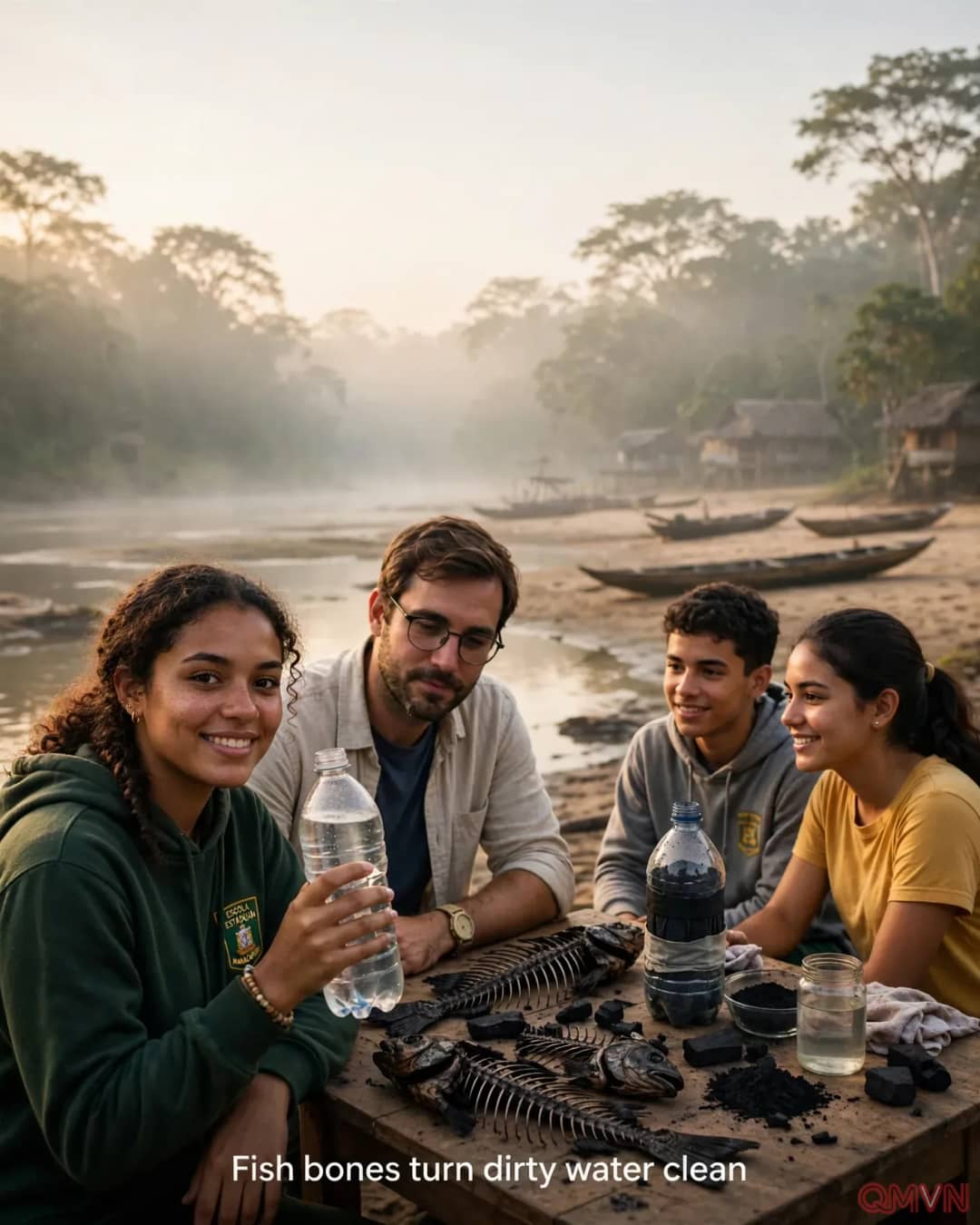
Pirarucu, a giant fish woven into the Amazon’s food economy, can reach roughly two metres in length. The meat is valued, while the remaining skeleton may become difficult-to-manage waste. At Jose Mota school, students treated that neglected material as the starting point for an environmental experiment: if mineral-rich, heat-treated bones could bind pollutants, a discarded byproduct might acquire a second useful life.
Biology teacher Galileu da Silva Pires told Reuters that the approach offers a more ecological adsorbent without cutting trees for charcoal. Its importance is not a claim to have invented bone char—related materials have been studied before—but the effort to adapt an existing scientific principle to local resources, local skills and a pressing local need.
What high heat can do—and what laboratory evidence cannot promise
According to the process described in the Reuters report, bulky fish vertebrae are heated to as much as 900°C and then ground into powder. Heat-treated bone materials can contain calcium-phosphate-rich minerals alongside carbon-containing phases that interact with dissolved pollutants.
Published research on fish-bone-derived apatite–carbon materials has explored the adsorption of heavy metals and persistent contaminants, although performance differs substantially with preparation methods and testing conditions.
That distinction matters. A promising adsorption result is not proof that a homemade device consistently meets drinking-water standards across the Amazon. Testing must establish contaminant levels before and after treatment, flow rates, material lifetime, possible leaching and safe disposal of media holding captured metals. The fuel or electricity required to sustain such high processing temperatures also belongs in any honest assessment of cost and environmental benefit.
Drought exposes the fragility of water security
For residents along Amazonian rivers, proximity to water is not the same as access to safe water. Extended dry periods reduce stored rainwater, while falling river levels can concentrate certain contaminants. Reuters reported that the Solimoes River near Manacapuru remained low after drought. Under such conditions, a filter made from a locally available byproduct has understandable appeal, particularly where conventional infrastructure is difficult to reach or maintain.
Clearer-looking water is not necessarily safe water, however. The World Health Organization assesses drinking-water risks across microbial and chemical hazards, while the US Centers for Disease Control and Prevention warns that boiling cannot make chemically contaminated water safe. A fish-bone filter would therefore need to be assessed as one element in an appropriate treatment system, supported by independent testing and disinfection where required—not advertised as a universal substitute for safe-water services.
A classroom invention with a broader social horizon
Eighteen-year-old student Ana Flavia Costa Lopes told Reuters that the group was delighted to improve filtered water while creating something valuable from waste. That pride conveys an educational achievement beyond any single prototype: young people are learning not only what pollution means, but how to investigate problems that affect neighbours, households and their own landscape.
If standardised and validated, the idea could encourage cooperation among schools, fishing families, processors and water-service providers. The next step would be publicly documented performance data, realistic production and replacement costs, and feedback from potential users. An inspiring invention becomes dependable public infrastructure only when it survives rigorous scrutiny and continues working through changing seasons.