The Board of Audit’s findings
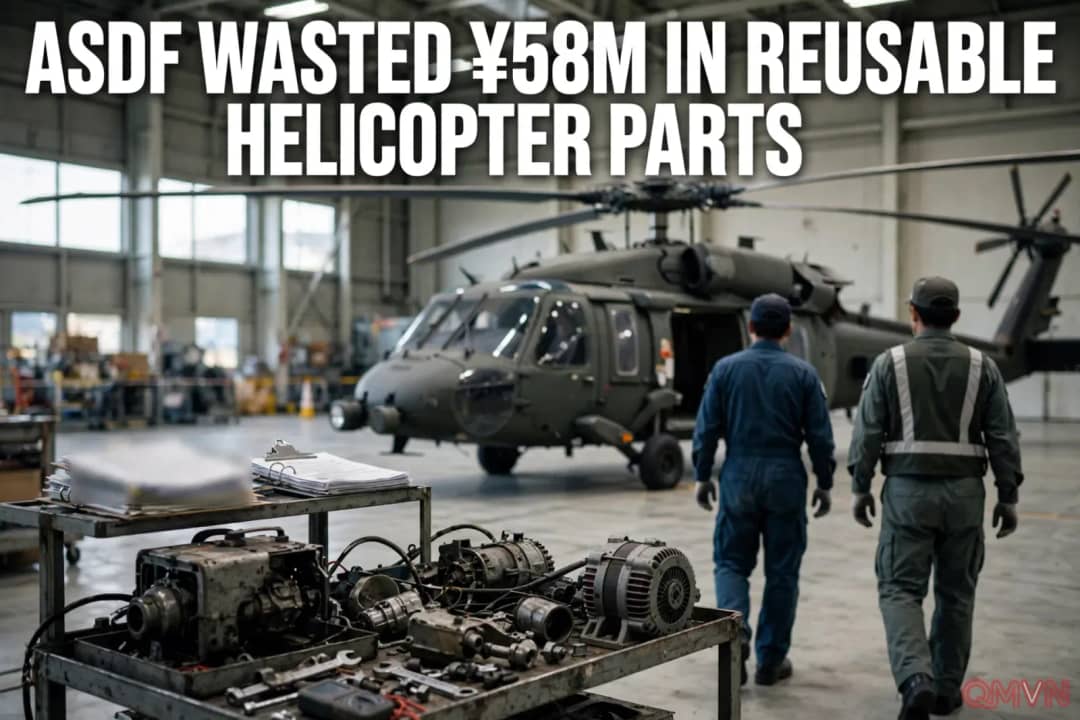
According to findings by Japan’s Board of Audit released by October 10, during the replacement of the Air Self-Defense Force’s UH-60J rescue helicopters, six parts in three categories, including generators, were not removed from older aircraft even though they could have been reused. Their total value was about 58 million yen.
The Board of Audit said the cause was that the procedure for reassessing the need to remove parts had not been formally documented.
Salvaging parts to save money
The Air Self-Defense Force routinely removes parts from older aircraft that can still be used on newer models, in order to hold down procurement costs. It is a common practice in many armed forces to make the most of public assets.
The Board of Audit examined 130 categories of parts installed on eight older helicopters that had received parts-removal notices between fiscal 2021 and fiscal 2025.
What the audit found
The audit revealed the following key points:
- Of the 130 categories, 53 had been removed from all eight aircraft.
- The remaining 77 categories were assessed individually, and depending on the aircraft, some were not removed.
- Four categories had been judged unnecessary to remove but later became needed; when reassessed during the audit, six parts in three categories, including generators, should have been removed and reused.
The Board of Audit concluded that it was inappropriate for the Air Self-Defense Force not to reassess after new demand arose, leaving parts that were expected to be needed unused.
The Ministry of Defense responds
After receiving the Board of Audit’s findings, the Air Self-Defense Force revised its manual for removing parts.
We will inform the relevant departments so that similar cases do not recur, and carry out parts removal appropriately.
Although 58 million yen is small relative to the defense budget, the case shows how procedural gaps can quietly waste public assets if not closely monitored.
Lessons for managing the defense budget
As Japan pushes defense spending to levels unprecedented since World War Two, the efficient use of every yen is drawing greater public attention. The Board of Audit’s findings help ensure that taxpayers’ money is spent as intended.
For modern armed forces, efficiency comes not only from buying new weapons but also from managing logistics and maintenance well and making systematic use of existing assets.