MAIN CONTENT
A narrow advantage with important conditions
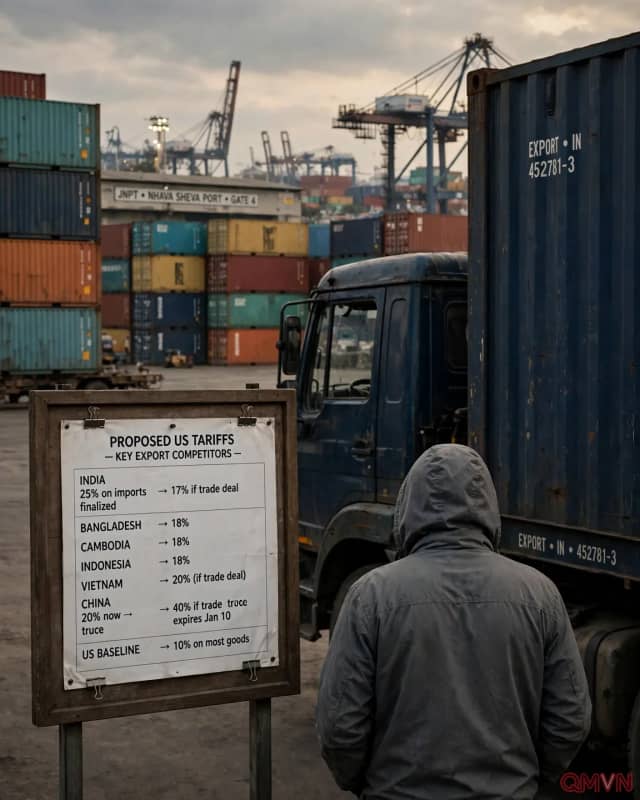
The proposed arrangement creates two markedly different scenarios for India. The difference between the maximum 25% rate and the conditional 17% rate is eight percentage points. For a business negotiating a contract with a thin margin, this is a potentially substantial change in landed costs. It is not, however, an automatic discount: the lower figure depends on a completed agreement, and the treatment of individual goods remains important. Companies cannot safely assume that a headline number will apply uniformly to every shipment.
Reuters identifies rates of 18% for Bangladesh, Cambodia and Indonesia, and 20% for Vietnam under a prospective agreement. The Indian Express also reports conditional rates of 18% for Malaysia and Thailand and 15% for the European Union, Japan and South Korea. These comparisons suggest that India could gain a modest advantage in certain markets while remaining at a disadvantage against other suppliers. China faces a distinct situation: its proposed 20% rate is linked to a truce due to expire on January 10, with a possible increase to 40% and older duties also relevant. Comparing headline rates without examining overlapping charges can therefore be misleading.