MAIN CONTENT
Nature provides the channels; microbes improve the current
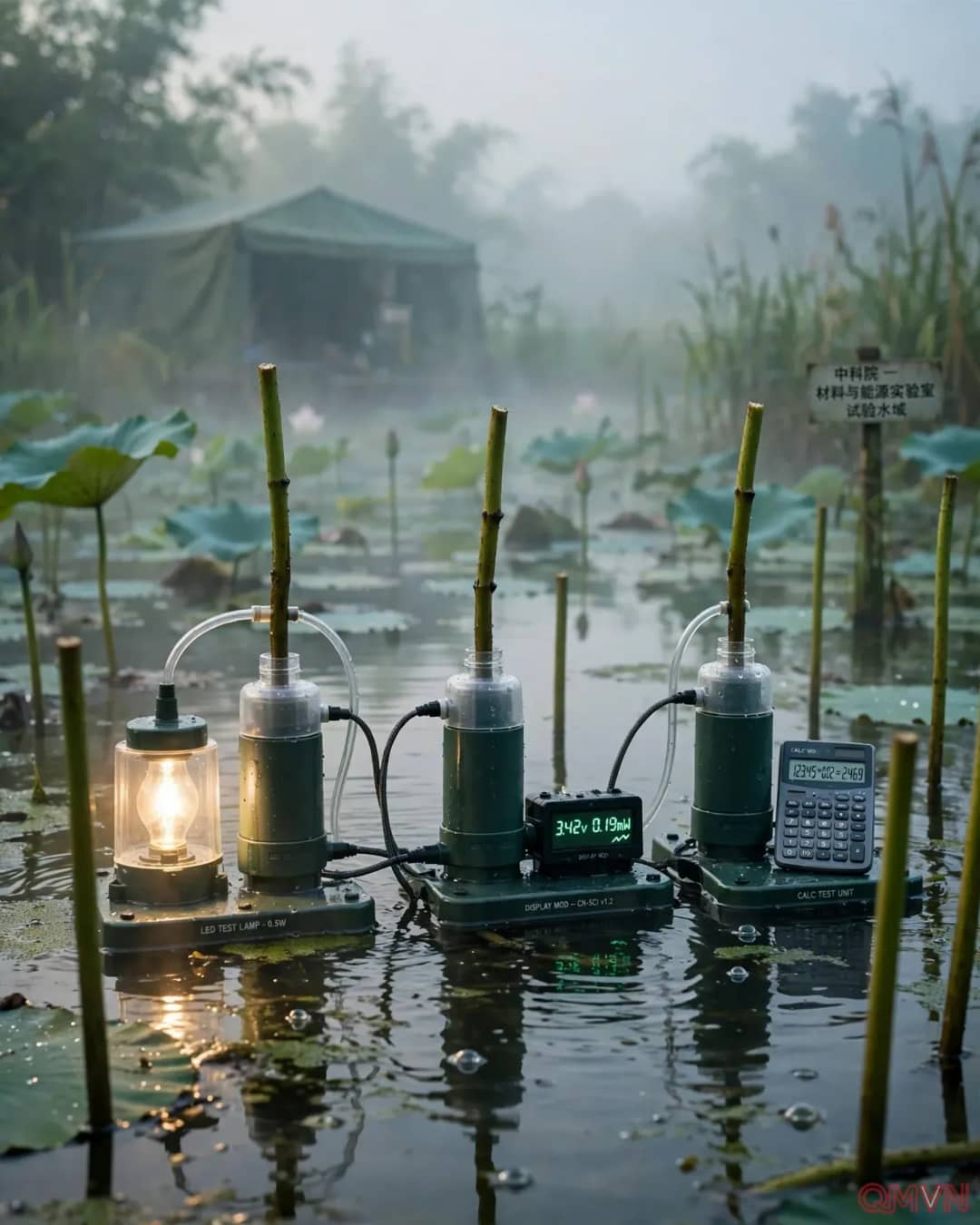
Lotus stems contain elongated passages that guide water along relatively orderly paths. Rather than manufacture a complicated porous scaffold from scratch, researchers including Xiuyu Lin and Qichang Hu used the stem itself as the foundation of a water-evaporation generator, known as LSG-WEG. Its aligned microchannels address a weakness of randomly arranged porous materials: wandering water and ion flows can waste energy before electrical charges are collected.
The team treated stem sections with Geobacter sulfurreducens, an electroactive bacterium capable of forming conductive biofilms. These films help charge transport, while water migration and evaporation establish conditions for electrical separation. Porous titanium electrodes were attached at opposite ends. The result is a biohybrid device with an engineered interface, not a claim that a cut plant can make electricity independently of environmental energy.
According to the paper's multiphysics simulations, channel geometry and improved interfacial conductivity reinforce one another. Evaporation rate and conductivity emerged as especially important determinants of performance. The method thus offers a broader materials-design idea: combine directional transport pathways borrowed from nature with components that reduce charge losses.