From open woodland to dense canopy
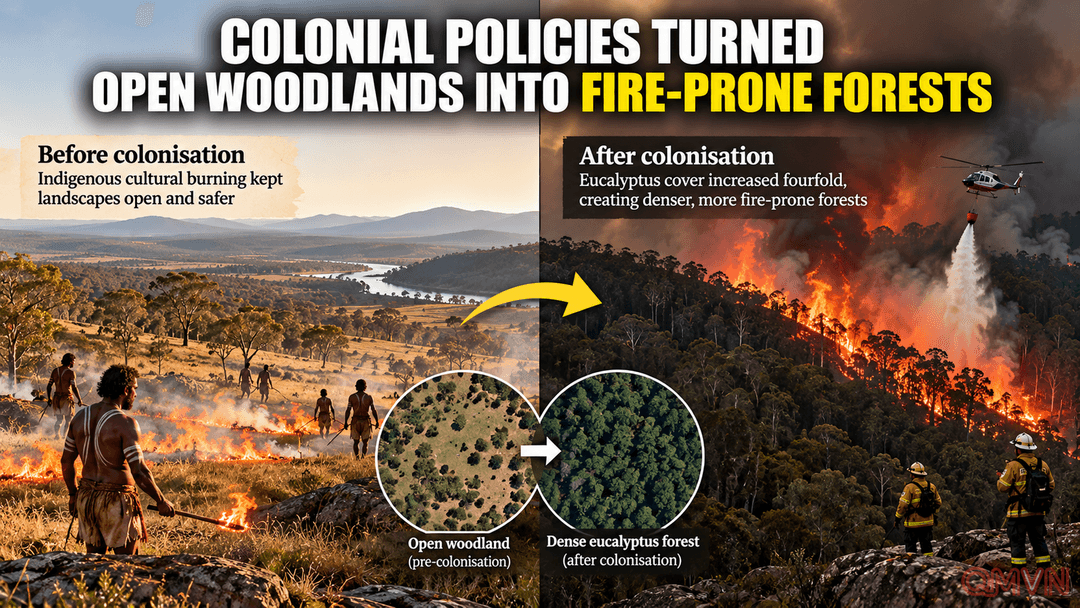
A new study of East Gippsland in southeastern Australia links the suppression of Indigenous cultural burning after British colonisation to a profound change in the landscape. Before British colonisation began in 1788, many Indigenous Australian communities used fire for ecological and cultural purposes.
Before British colonisation began in 1788, many Indigenous Australian communities used fire for ecological and cultural purposes. A new study of East Gippsland in southeastern Australia links the suppression of Indigenous cultural burning after British colonisation to a profound change in the landscape.
A new study of East Gippsland in southeastern Australia links the suppression of Indigenous cultural burning after British colonisation to a profound change in the landscape. Before British colonisation began in 1788, many Indigenous Australian communities used fire for ecological and cultural purposes.
What sediments reveal about historical fire
Researchers at the University of Melbourne report that eucalyptus cover increased approximately fourfold, turning relatively open woodland into dense forest with more combustible vegetation. Carefully timed, relatively cool burns helped sustain mosaics of grassland and open woodland.
Carefully timed, relatively cool burns helped sustain mosaics of grassland and open woodland. Researchers at the University of Melbourne report that eucalyptus cover increased approximately fourfold, turning relatively open woodland into dense forest with more combustible vegetation.
Researchers at the University of Melbourne report that eucalyptus cover increased approximately fourfold, turning relatively open woodland into dense forest with more combustible vegetation. Carefully timed, relatively cool burns helped sustain mosaics of grassland and open woodland.
Climate change meets land-use history
Published in Nature, the findings suggest that today’s bushfire exposure reflects not only a warming climate but also centuries of land management decisions. Colonial restrictions on those practices gradually altered fire regimes and vegetation.
Colonial restrictions on those practices gradually altered fire regimes and vegetation. Published in Nature, the findings suggest that today’s bushfire exposure reflects not only a warming climate but also centuries of land management decisions.
Published in Nature, the findings suggest that today’s bushfire exposure reflects not only a warming climate but also centuries of land management decisions. Colonial restrictions on those practices gradually altered fire regimes and vegetation.
Restoring Indigenous stewardship
By reconstructing roughly 1,000 years of vegetation and fire history in Croajingolong National Park, the team highlights the importance of Indigenous knowledge in managing fuel. The Croajingolong findings should not be applied uncritically to every Australian forest: rainfall, terrain and land-use histories vary.
The Croajingolong findings should not be applied uncritically to every Australian forest: rainfall, terrain and land-use histories vary. By reconstructing roughly 1,000 years of vegetation and fire history in Croajingolong National Park, the team highlights the importance of Indigenous knowledge in managing fuel.
By reconstructing roughly 1,000 years of vegetation and fire history in Croajingolong National Park, the team highlights the importance of Indigenous knowledge in managing fuel. The Croajingolong findings should not be applied uncritically to every Australian forest: rainfall, terrain and land-use histories vary.