Joy reaches Chiba
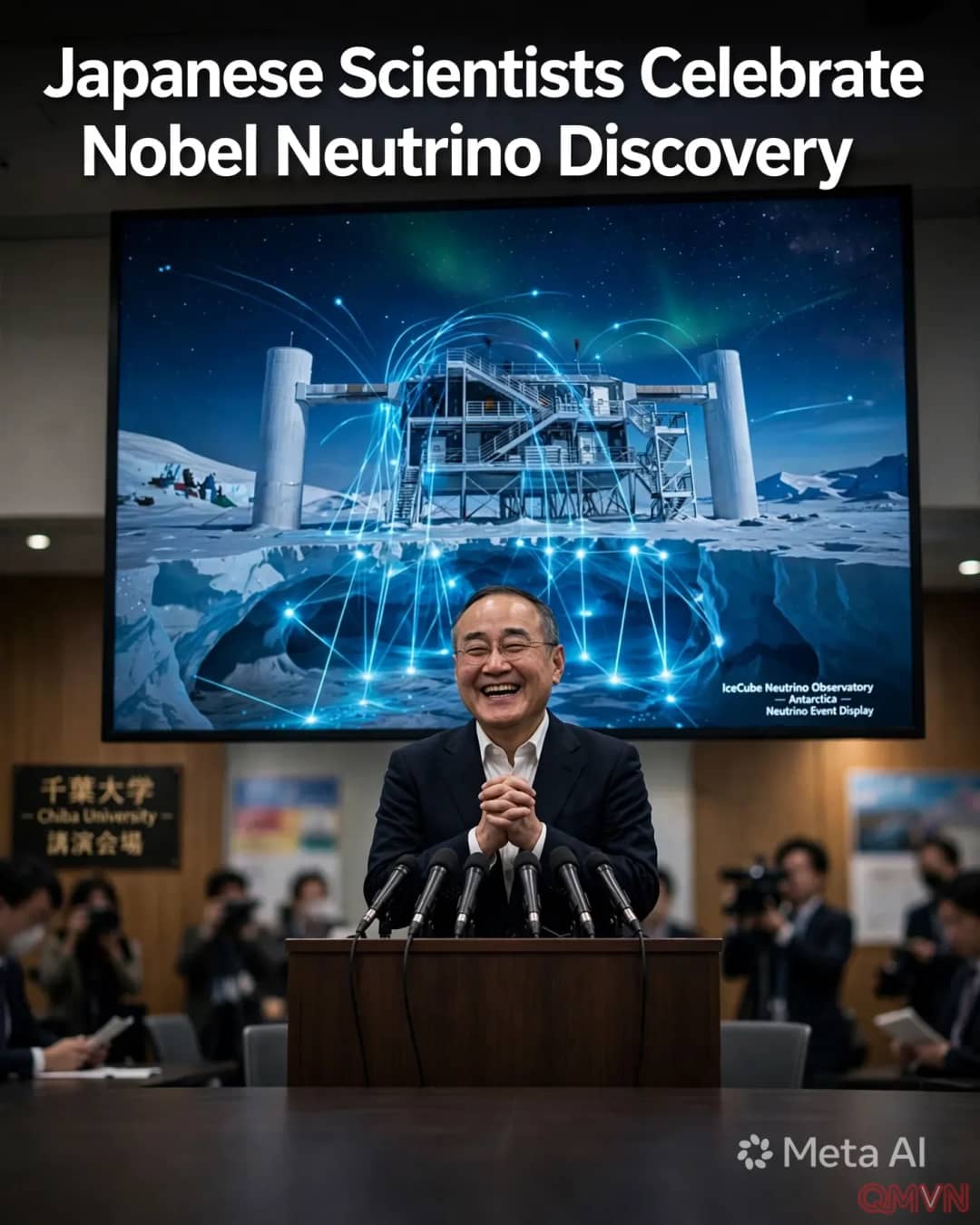
On Tuesday afternoon, soon after the news of Halzen's Nobel Prize broke, Professor Shigeru Yoshida, director of Chiba University's International Center for Hadron Astrophysics, held a news conference on campus. He said he was “very happy” that the leader of IceCube had been recognised at the highest level of world science.
“We were able to catch a glimpse of the universe that no one has ever seen.” — Shigeru Yoshida
For the Chiba team, the prize is more than an individual honour. Japanese scientists played an important role in the analysis that led to the detection of the first two peta-electronvolt neutrinos, nicknamed “Bert” and “Ernie”, announced in 2013, a turning point that opened the field of high-energy neutrino astronomy.
A decision once met with doubt
Recalling 2002, when he decided to join IceCube, Yoshida admitted that many people around him opposed the move, and that he too had been sceptical. At the time, the idea of turning the deep Antarctic ice into a giant telescope was dismissed by many as fanciful.
“In the world of science, nothing is promised from the beginning.” — Shigeru Yoshida