MAIN ARTICLE
Doñana: where migrations and seasons meet
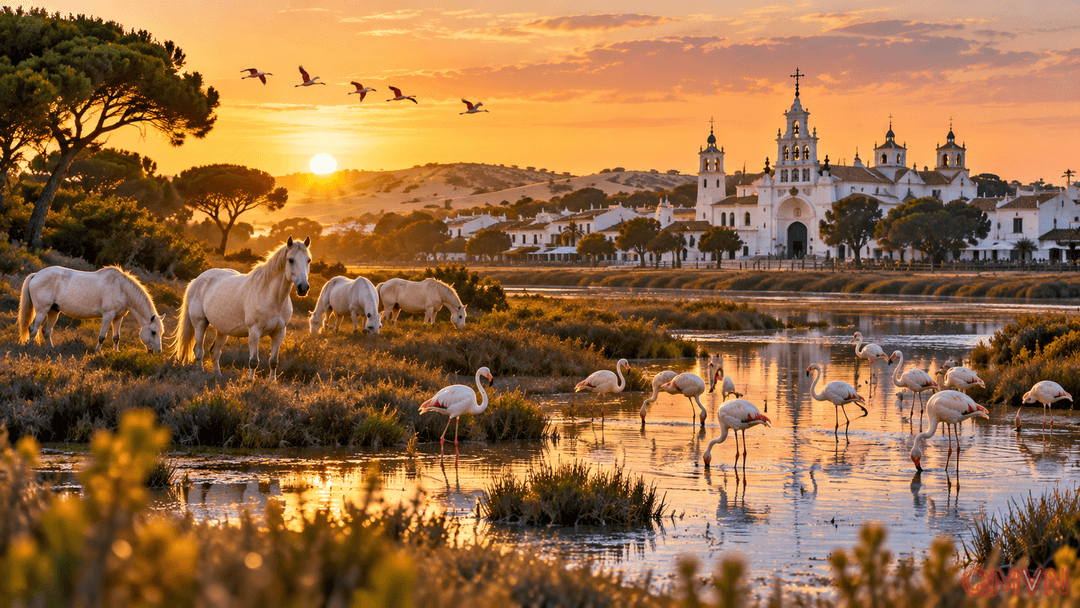
A journey across Huelva can begin at Doñana, near the mouth of the Guadalquivir. UNESCO recognizes a remarkable mosaic of marshes, lagoons, scrub, woodland and both stable and moving dunes. It is a landscape shaped by water rather than a fixed postcard. Summer exposes dry ground, winter rains replenish wetlands, and spring gives the vegetation new color. The alternation creates different habitats within a relatively compact area.
For migrating birds traveling between Europe and Africa, Doñana provides a vital stopping place. Flamingos, herons and many other waterbirds reward patient observation, particularly from appropriate routes and viewing points. Wild horses and deer may also be seen in the wider landscape. The Iberian lynx is a conservation success story associated with the region, but sightings remain unusual; responsible guides cannot promise an encounter with a wild animal.
El Rocío: the unhurried village of sandy streets
El Rocío sits on the edge of the marshes. Its broad, unpaved lanes, whitewashed houses and horse culture distinguish it from the polished resorts elsewhere in southern Spain.