MAIN ARTICLE
Fundraising gathers pace as AI reshapes priorities
According to Preqin, 21 infrastructure funds raised a combined $62 billion in the third quarter of 2026. Across the first nine months, 65 funds attracted $101 billion. The recovery reflects expectations that essential assets will benefit from two powerful forces: AI requires intensive computing and economies increasingly prize reliable energy systems. But fundraising totals represent capital committed to investment vehicles, not money already spent on operational data centers. The distinction matters when assessing the speed at which financial enthusiasm becomes physical capacity.
Brookfield Asset Management offers a revealing example. Its November 6 results reported $26 billion of commitments to its latest flagship infrastructure strategy, including $13 billion secured after the third quarter ended. Management aims to surpass $30 billion in early 2027, topping the predecessor fund’s $28 billion. That scale provides resources for long-lived assets but raises the stakes for disciplined selection. A large fund must find projects whose economics survive higher construction costs and changes in customer demand, not merely projects bearing the fashionable AI label.
Computing capacity depends on a much larger power system
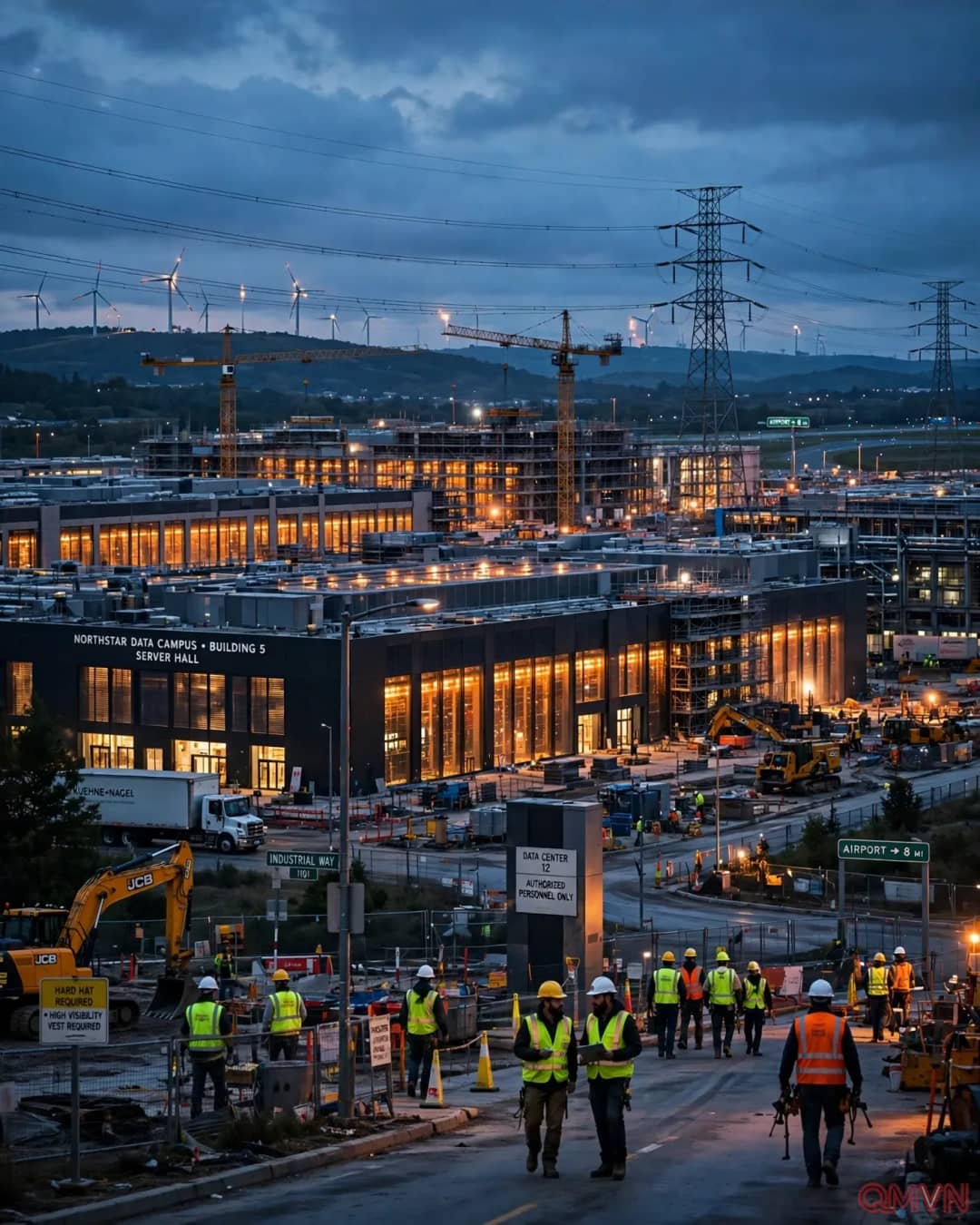
A modern data center depends on far more than server racks. It requires substations, transmission connections, cooling systems, water arrangements and electricity that can run continuously.
As advanced AI models consume greater computing resources, the bottleneck may shift from securing chips to securing timely grid access. Private infrastructure capital therefore has opportunities across the network that enables digital services, from generation and storage to the facilities that deliver power to a site.
This demand coincides with government priorities ranging from energy security to resilient supply chains. In Europe, the pursuit of technological autonomy overlaps with investment in renewable generation, communications networks and storage. But new capacity cannot always be delivered on command. Lengthy permits, transmission congestion and volatile electricity prices can alter forecasts. A data center may have willing tenants yet still face delays when the local grid cannot connect it. Successful investment requires examining all these dependencies together.
Fresh commitments meet a slower exit market
Goldman Sachs surveyed 225 institutional investors between June and August. Of those responding, 43% had become more positive about infrastructure relative to the preceding year, while 7% had become less positive. Among investors with infrastructure allocation targets, 49% reported being underweight and only 5% overweight. These figures identify potential appetite, not binding promises to commit money immediately. Pension funds, insurers and sovereign investors must still reconcile new opportunities with existing portfolio obligations.
A second constraint is the time needed to sell assets and return proceeds. Boston Consulting Group found that companies held by the 50 largest infrastructure general partners stayed in portfolios for an average of 7.6 years in 2025, versus 6.1 years in 2021. Some transactions now use continuation vehicles, moving holdings into a different fund rather than selling them outright. Such structures may sustain ownership and provide selective liquidity, but they do not remove the challenge of converting long-duration assets into cash for investors waiting for distributions.
Inflation resilience comes with important limits
Infrastructure can offer long contracts, relatively predictable demand and, in some cases, revenue indexed to inflation. JPMorgan Asset Management argues that digital and energy assets may benefit from stronger public and corporate expenditure in 2027. Those characteristics appeal to institutions responsible for meeting obligations over decades. They may also provide portfolio diversification when inflation and interest-rate surprises undermine more conventional holdings.
None of this makes infrastructure risk-free. Expensive debt raises financing costs; computing and cooling technology may evolve quickly; and contracted revenue depends on the creditworthiness of tenants. Recent strong returns in some power assets are not a dependable forecast of future performance. Investors need to scrutinize leverage, power access, customer concentration, environmental obligations and plausible exit routes. The lasting value of AI-related infrastructure will come not from its branding, but from its ability to provide reliable services through changing technology and economic cycles.