MAIN ARTICLE
From youthful brilliance to a later decision
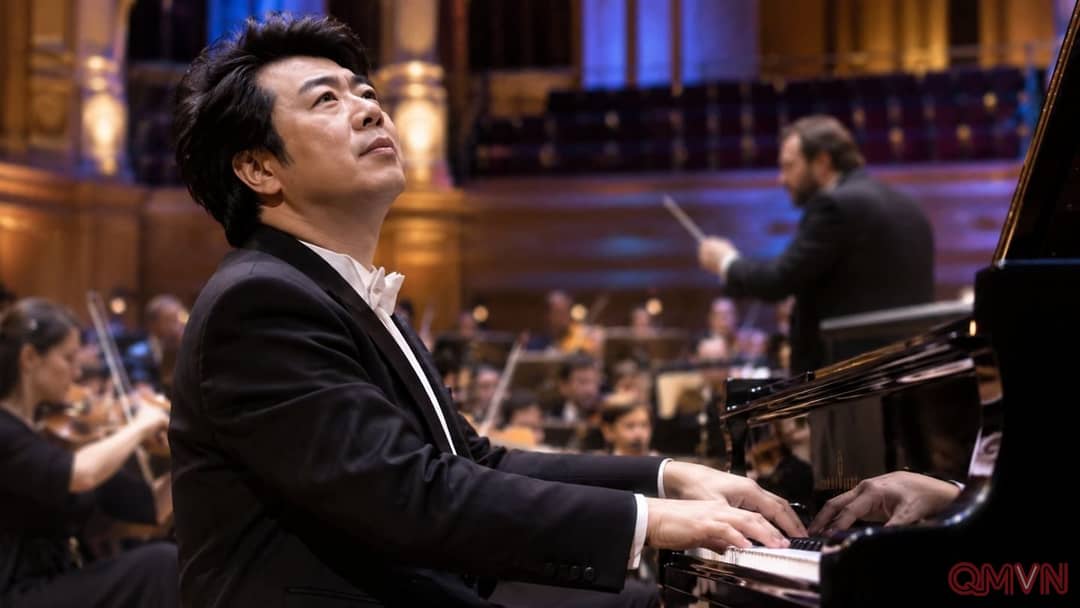
Lang Lang’s international breakthrough in 1999 introduced an electrifying stage personality whose technical assurance seemed almost limitless. Yet the five Beethoven concertos demand something different from a display of virtuosity. Across the cycle, the soloist must sustain a developing relationship with an orchestra, allowing contrasting moods to belong to a larger musical argument.
Speaking to the Associated Press, Lang Lang compared his own development to red wine. The metaphor hints at an altered artistic priority: the biggest sound and fastest passage need no longer be the most important. Color, balance, breathing space and the architecture connecting phrases can become equally compelling.
He recorded Concertos Nos. 1 and 4 with Christoph Eschenbach and the Orchestre de Paris in 2007. The new collection is therefore not his first Beethoven recording, but it is his first completed studio cycle, assembled through a single, more seasoned perspective.
Leipzig’s orchestra and an echo of 1811
The Gewandhausorchester Leipzig brings more than contemporary prestige. Its Beethoven connection extends back to the composer’s lifetime, when the orchestra premiered the Fifth Piano Concerto, popularly known as the ‘Emperor’, in 1811. That historical thread gives the recording an unusual sense of continuity.
Lang Lang and conductor Andris Nelsons had previously collaborated on a Saint-Saëns project. For Beethoven, the orchestra’s long-established sound offers a complement to the pianist’s expressive, often luminous playing. Six recording sessions without an audience made room to examine details that the energy of a public performance can sometimes obscure.
Deutsche Grammophon also lists Piano Sonata No. 31, Op. 110, and two piano arrangements drawn from Symphonies Nos. 7 and 9 among the additional material. These pieces are supplements, not a sixth concerto. The sonata has a personal resonance: Lang Lang performed it as part of his entrance audition for the Curtis Institute of Music.
What Bach and injury taught the pianist
In 2017, tendinitis forced Lang Lang to cancel months of appearances. For a musician accustomed to relentless travel, the interruption placed the physical limits of performance in sharp relief. Technical mastery also requires knowing when to protect the hands and give musical ideas time to evolve.
Another turning point came with his 2020 recording of Johann Sebastian Bach’s ‘Goldberg Variations’. Lang Lang has explained that studying the work altered his thinking about slower passages and the movement of sixteenth notes. An experience rooted in Bach now informs his approach to Beethoven, whose music continually balances formal logic with emotional urgency.
The new cycle should therefore be judged on more than accuracy or speed. The revealing questions concern what Lang Lang chooses to emphasize, how much space he allows the orchestra, and whether quiet, apparently simple moments carry the same conviction as the grand climaxes.
One repertoire, many legitimate voices
Beethoven’s concertos already possess a formidable recorded history, including interpretations by Alfred Brendel, Leon Fleisher, Artur Rubinstein and Artur Schnabel. Lang Lang does not need to displace a definitive model. The repertory endures precisely because the same score can sustain different credible readings, provided the musical argument remains coherent.
Earlier criticism of Lang Lang’s flamboyant performances shows that mass popularity has never guaranteed critical consensus. Collaborations with pop performers and appearances at Olympic ceremonies widened the audience for classical piano. That accessibility, however, also brings the ongoing challenge of demonstrating depth behind celebrity.
Lang Lang is also scheduled to perform all five concertos over three programs with Paavo Järvi and the Chicago Symphony Orchestra in March 2027. Two centuries after Beethoven’s death, the most meaningful ambition may not be to force old music to sound novel, but to help contemporary listeners hear possibilities that have been present all along.