Main report
What Rutte said and why Tehran objected
In a statement circulated on September 24–25, 2026, Iranian Deputy Foreign Minister for Legal and International Affairs Kazem Gharibabadi accused European countries of making their facilities available for the American campaign. He presented NATO Secretary-General Mark Rutte’s remarks as confirmation of a European role in an operation Tehran labels unlawful. That is Iran’s legal and political position, not a ruling by an international court.
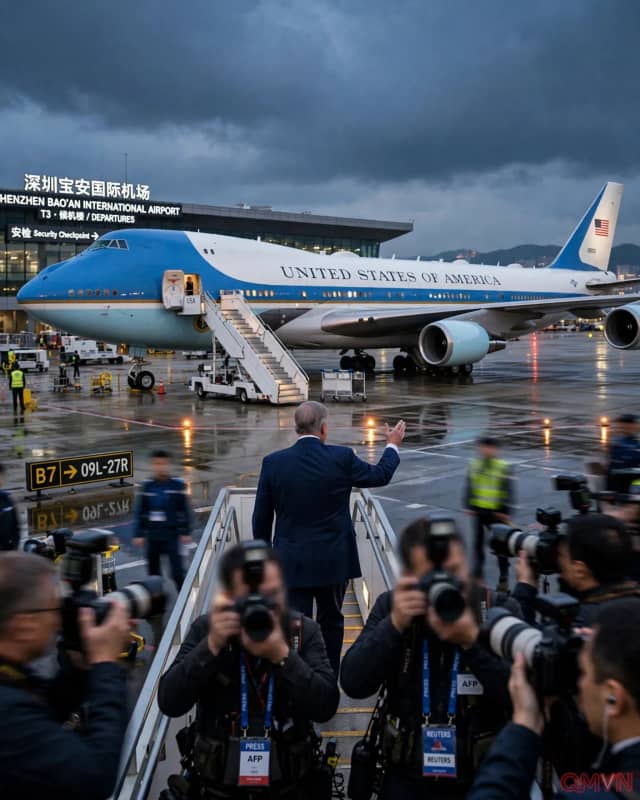
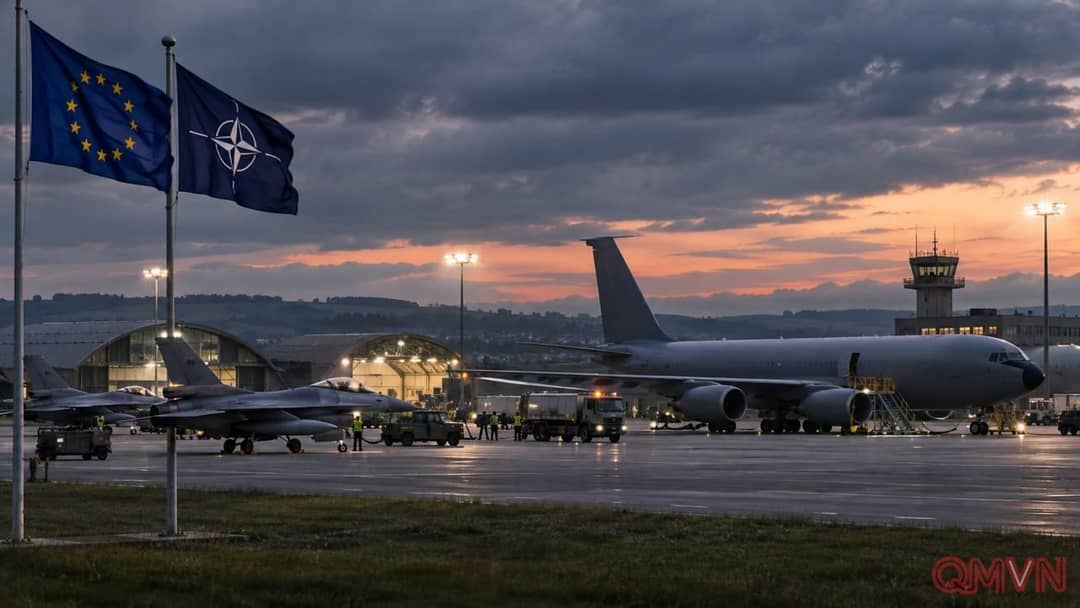
In an official September 23 transcript, Rutte said roughly 5,000 sorties had departed European bases in support of the US operation known as Epic Fury since February 28. The figure he cited referred to flights counted through approximately mid-April. Earlier, in June, he had described between 4,000 and 5,000 sorties. These totals show the scale of basing activity but do not establish what mission each aircraft performed or which host state approved any particular strike.
Rutte described Europe as a platform from which the United States could project military power. At the same time, he explicitly differentiated NATO's institutional activities from bilateral agreements negotiated by Washington with individual European allies. His statement therefore cannot simply be read as an announcement that NATO collectively decided to enter a war against Iran.
The difference between basing support and combat
Tehran argues that the use of airfields, airspace, refuelling facilities and logistical networks may expose host governments to responsibility. Iranian accounts have identified countries including Britain, Germany, France, Italy and Romania.
But the nature and scope of support provided by each country require separate verification against basing agreements, operational decisions and credible flight records.
Foreign airbases perform multiple tasks. Some sorties may move personnel, carry cargo, provide aerial refuelling, conduct reconnaissance or sustain aircraft rather than deliver weapons. A numerical total alone cannot distinguish these functions. That distinction matters because the fact that a flight departed from European territory does not automatically identify the target, military purpose or legal authorization behind it.
Host countries may grant standing access under long-established agreements, restrict particular uses of their airspace, or require additional authorization for specific operations. Certain arrangements operate outside NATO command structures. An assessment of state responsibility would therefore need to examine what the host government knew, what it permitted, and how the underlying military action is characterized under international law.
What international law actually requires
Iran cites United Nations General Assembly Resolution 3314 (XXIX), adopted in 1974. Article 3(f) lists among acts of aggression a state permitting its territory, which it has placed at another state's disposal, to be used for an act of aggression against a third state. The provision exists and is materially relevant to the question Tehran is raising.
However, Article 3(f) does not declare every logistical activity unlawful. Its application entails examining whether the underlying use of force constitutes aggression, whether the territory was made available for that purpose and the surrounding facts. Resolution 3314 must be read with its other provisions and the UN Charter; the Security Council's role and the circumstances of the case also matter.
US and allied officials have defended the campaign in security terms, while Iran disputes those justifications and invokes sovereignty. These are competing claims that should remain attributed to their speakers. The material reviewed here does not establish a judicial finding that every European country named by Tehran committed an act of aggression.
A wider test of transatlantic accountability
For European governments, the dispute may sharpen demands for transparency about flight permissions, refuelling missions, parliamentary oversight and the limits of US access to national facilities. Their challenge is to reconcile longstanding defence cooperation with the duty to explain the legal basis of decisions made from their territory. Detailed records matter more than sweeping political labels.
For NATO, the episode illustrates how an alliance devoted to collective defence intersects with a separate network of US forces based across Europe. For Tehran, the controversy is also a diplomatic strategy to raise the political costs of supporting Washington. Neither interpretation substitutes for independent evidence of any individual government's conduct.
A careful accounting would identify which operations used which facilities, distinguish combat sorties from supporting flights, and specify the legal justification invoked in each instance. Without that detail, certainty is premature. The line between lawful cooperation, responsibility for internationally wrongful acts and participation in aggression requires a factual inquiry, not merely a tally of departures.