Classrooms where children build with AI
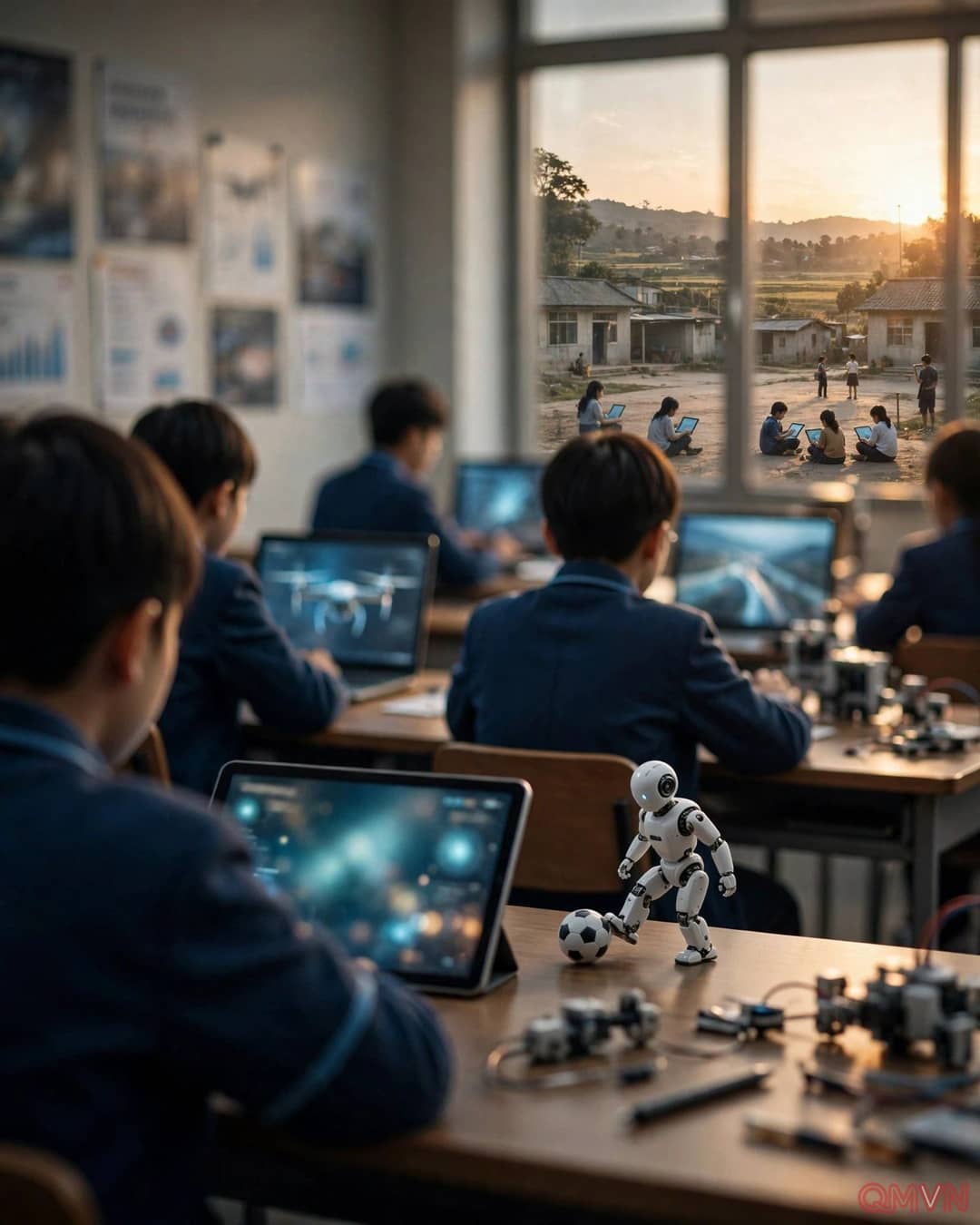
At Beijing New Talent Academy, a private boarding school charging about $39,000 a year, 13-year-old Peng Gaodi has used AI to build more than 200 apps, from a homework-submission platform to a secondhand marketplace. Around him, classmates program humanoid robots to play soccer and train on flight simulators, while posters invite students to create a virtual world in five minutes through AI vibe coding.
The school, which serves more than 2,000 pupils, has written its own curriculum covering AI, robotics and programming, and has developed a classroom AI model drawing on popular Chinese systems. Headmaster Liu Wei says only a small minority will become AI scientists or engineers; for the rest, the aim is to make AI an everyday tool for learning and creating.
In the past, if I couldn't solve a problem at home, I'd have to call my teacher. But now I can just ask AI to help me learn better.
A national blueprint on an unprecedented scale
President Xi Jinping has declared AI education fundamental to reform, and the state-led push far outpaces efforts in the West. According to Stanford University's 2026 AI Index, the United States relies on decentralised, non-binding guidance and lacks dedicated funding or state-level teacher standards. In China, by contrast, Shanghai mandates at least 30 hours of AI teaching per grade each year, Beijing plans 100 AI pilot demonstration schools, and regions such as Ningxia and Gansu intend to fold AI literacy into high-stakes entrance exams by 2027.