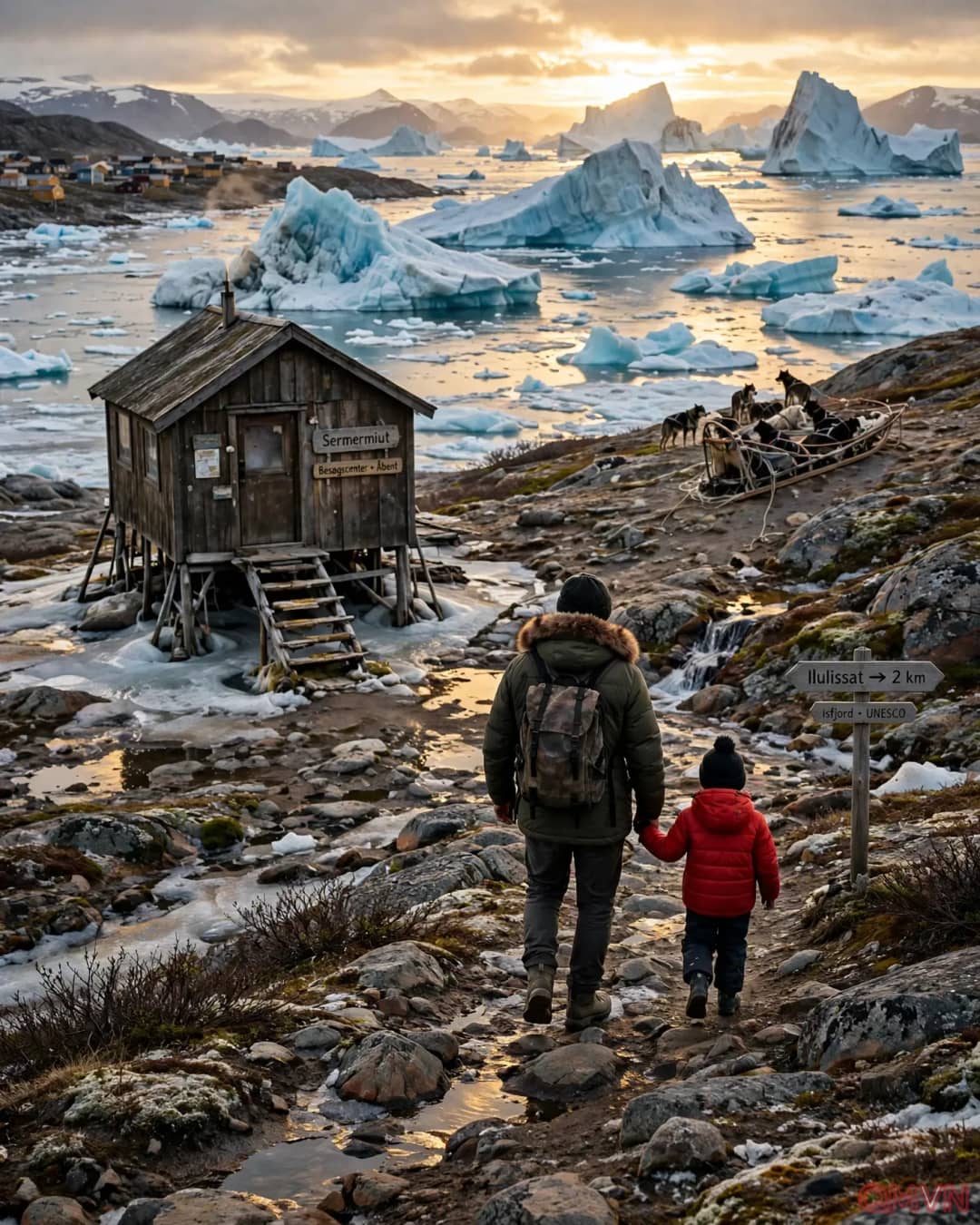
Icebergs that are not what they used to be
Cuno Jensen, 42, a father of three and a corrections officer, recalls his childhood in Ilulissat, about 300 kilometers north of the Arctic Circle, when his family hunted birds and watched huge icebergs drift out into Disko Bay. Today the icebergs are still there but not as tall or big as before, and he fears his children will never experience what he did.
When we were kids playing around these hills, there was much more snow and the water was frozen and it was ice. We could get out on the ice and fish. That’s nothing we can do today.
Largely because of climate change driven by the burning of oil, gas and coal, the Arctic is warming four times faster than the rest of the planet.
The “Mapping Memories” project
An exhibit linked to the project opened in September at the Icefjord Center in Ilulissat, billed as Greenland’s first visitor center devoted to exploring the link between people and nature. Center director Karl Sandgreen said the project aims to add ordinary people’s perspective alongside scientists’ data.