MAIN ARTICLE
From students to creators
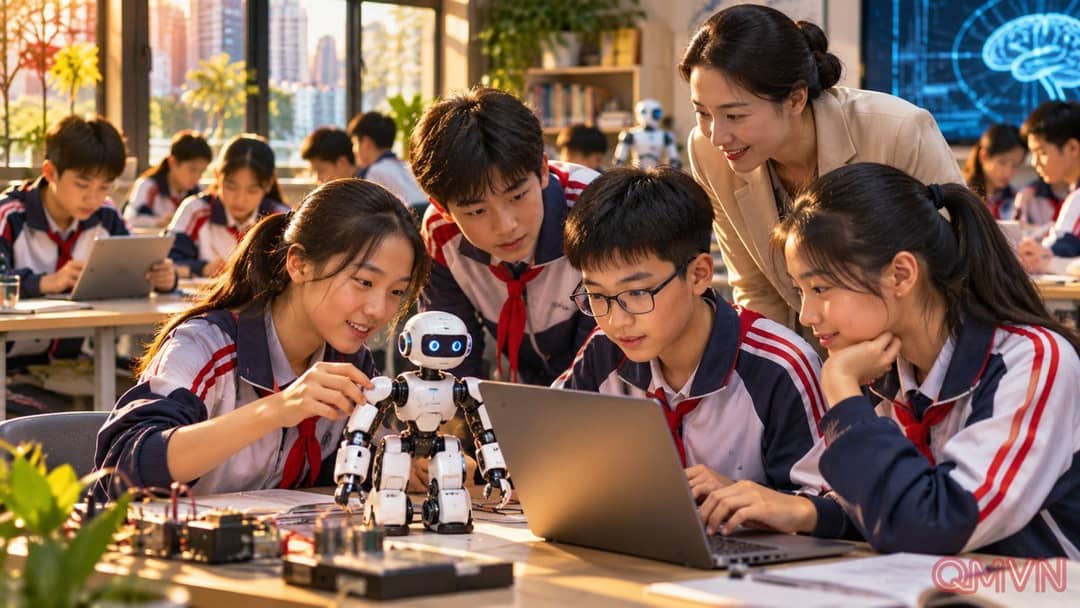
At Beijing New Talent Academy, 13-year-old Peng Gaodi has built more than 200 AI-assisted applications, including a homework platform and a secondhand marketplace, Reuters reported. Classmates program soccer-playing robots, explore flight simulators and turn ideas into prototypes. Here AI is more than a digital answer key: it can shorten the journey from imagination to a working product. But an elite private school charging roughly $39,000 a year cannot serve as a representative portrait of the entire Chinese education system.
In rural Anhui, Funan County Qinqing High School is using AI-generated lessons to address a shortage of qualified teachers among its roughly 4,000 pupils, many from migrant families. Headmaster Yang Tianliang says AI agents encourage children with questions rather than immediately revealing solutions. He credits the approach with improving university admission rates, although Reuters could not independently verify that claim. The two schools illustrate different purposes for the same technology: extending opportunities for invention in one setting and strengthening basic access to instruction in another.
National ambitions, uneven classrooms
China educates nearly 200 million primary and secondary pupils. From guidelines issued in 2024 to its 2026 AI Plus Education initiative, the government has outlined a progression from early familiarity to complex projects and critical evaluation.