MAIN CONTENT
Six volumes turn a political legacy into a system of questions
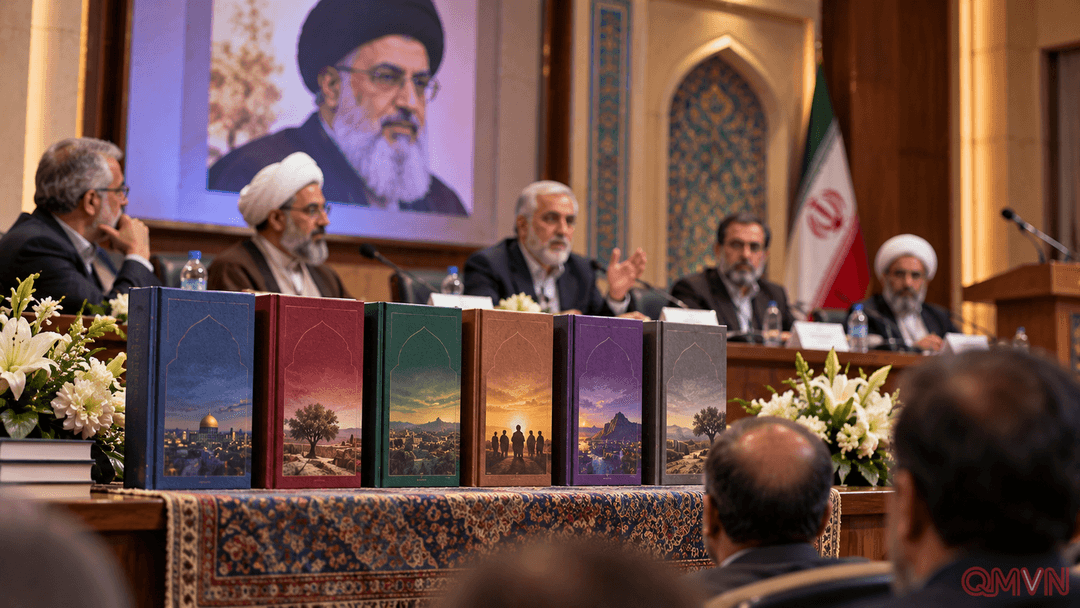
According to Tehran Times, author Mehdi Afraz structured “1001 Questions on Resistance” as 1,001 questions and answers drawn from roughly three decades of Hassan Nasrallah’s statements and conversations. Rather than following a simple chronology, the collection is divided into six areas: the theology of resistance, political thought, society, strategic equations, the broader resistance bloc and the Lebanese case.
This structure suggests that the project aims to do more than archive quotations. Its editors seek to transform scattered material into an intellectual framework that can be studied, taught and adapted for media or artistic work. That ambition makes the publication part of a larger process: defining how later generations are invited to interpret Nasrallah.
Recasting a military figure as a social and political organizer
Speakers at the Tehran event argued that Nasrallah is often reduced to his military role and confrontations with Israel. They highlighted instead his organizational management, cadre education, social mobilization and ability to operate within Lebanon’s complex religious and political landscape.