MAIN CONTENT
Selling spreads through the semiconductor supply chain
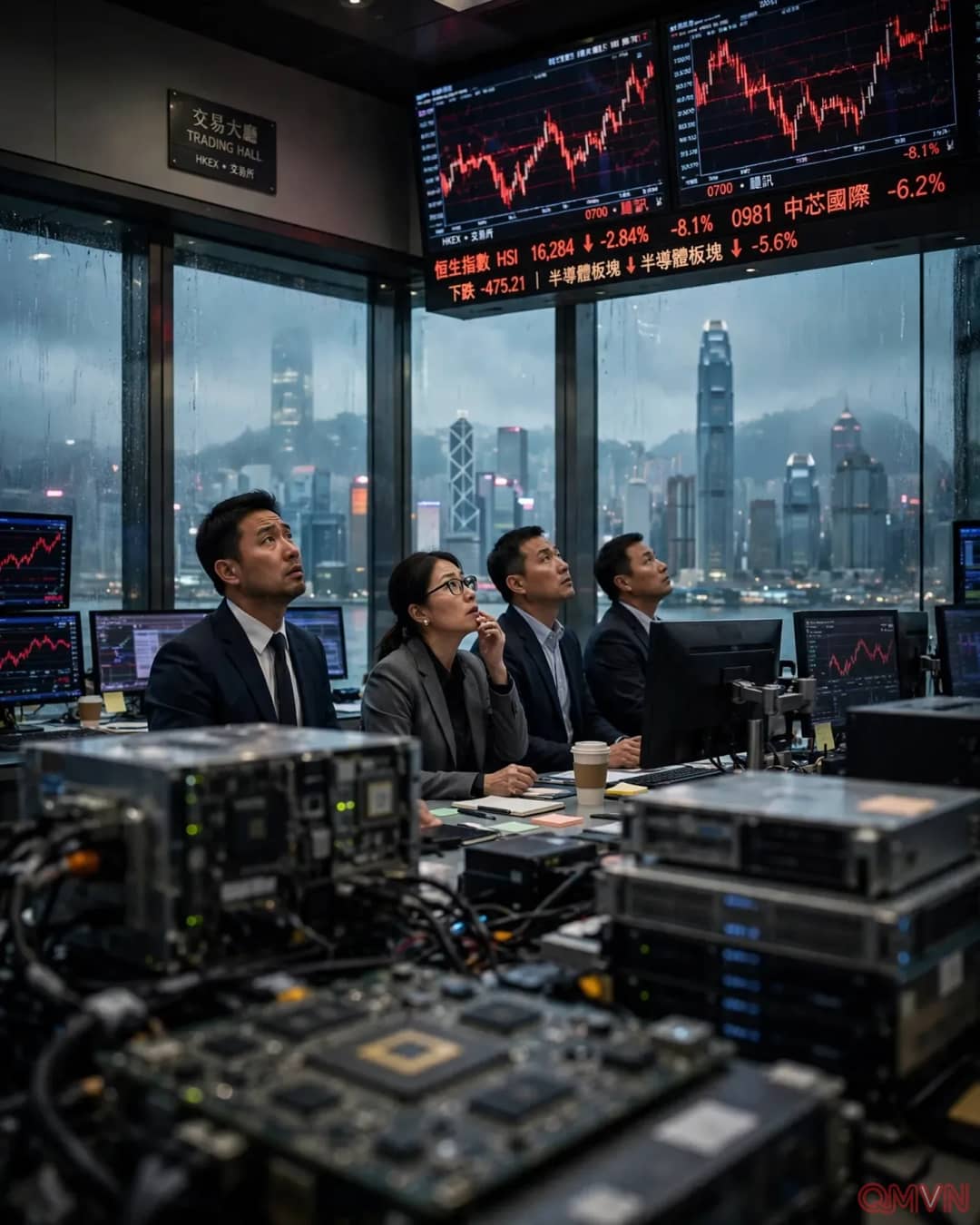
South Korea’s Kospi fell 2.8% to 5,142.84 at the point captured by AP, with SK Hynix losing 5.5% and Samsung Electronics declining 3.2%. Both companies are prominent memory-chip suppliers in an industry whose fortunes have become closely linked to AI computing. Taiwan’s Taiex dropped 4.1%, while TSMC shares fell 3.4%. The pressure thus reached beyond the designer of AI accelerators to the companies that manufacture semiconductors and supply crucial components.
Japan’s Nikkei 225 was down 1.6% at 60,182.50. SoftBank Group declined 4.2%, memory producer Kioxia Holdings lost 5.5%, and semiconductor equipment maker Tokyo Electron fell 5.2%. These businesses participate in different parts of the technology economy, from investing in innovative companies to supplying chips and manufacturing machinery. Their simultaneous declines suggest a broad repricing of risk around the AI growth narrative, not proof that orders for every kind of technology product have fallen.
A leadership shock meets questions about AI valuations
Nvidia announced on November 12 that Jensen Huang had resigned as chief executive and from its board, while chief financial officer Colette Kress would serve as interim CEO. A filing with the U.S. Securities and Exchange Commission recorded the board’s acceptance of the resignation effective November 11.