MAIN ARTICLE
From school laboratories to a national ambition
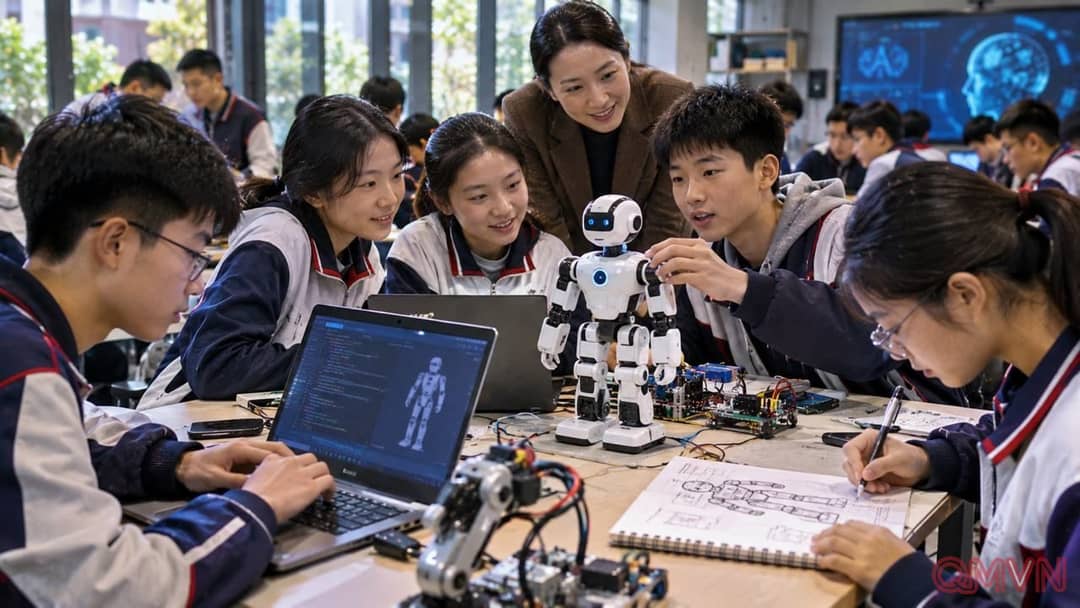
At Beijing New Talent Academy, pupils program robots, experiment with digital products and use flight simulators. Reuters encountered Peng Gaodi, a 13-year-old who says he has built over 200 apps, including tools for homework submission and secondhand trading. With fees of about $39,000 a year, the school illustrates the leading edge of AI education, not the experience of every Chinese child.
China's Ministry of Education issued guidance on AI literacy in 2024. Younger children are expected to grasp basic ideas; older pupils learn to use the tools; secondary students apply them in more sophisticated projects. An “AI Plus Education” plan announced in 2026 broadened the ambition toward a comprehensive AI learning system by 2030.
Reuters found that nearly half of provincial-level jurisdictions had binding AI education plans. Shanghai requires at least 30 teaching hours a year in each grade, while Beijing plans 100 demonstration schools. Some areas are considering AI literacy in competitive entrance examinations, raising the stakes for students and educators alike.