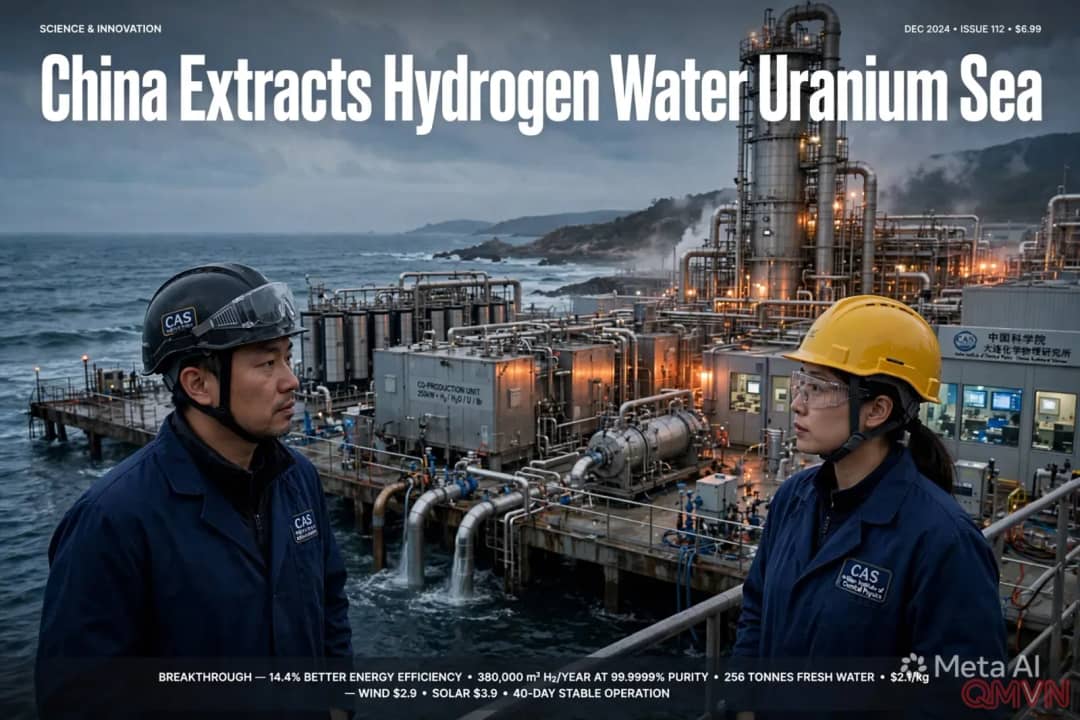
One System, Many Gifts From the Sea
Producing hydrogen from seawater with renewable energy is seen as an important route to green hydrogen, but both main methods have drawbacks. In direct seawater electrolysis, chloride ions corrode the anode, while calcium and magnesium ions form scale on the cathode and reduce efficiency. The two-step method, desalinating first and then electrolysing, requires expensive desalination equipment and consumes a lot of electricity.
The Dalian team chose to improve the second, technologically mature route. According to the study published on Sept. 15, the new system not only yields hydrogen but also produces enough fresh water to run the electrolyser, with some left over. Salt, uranium, bromine and other marine resources can be extracted from the remaining concentrated seawater in multiple stages.
Plugging an Overlooked Energy Leak
The breakthrough targets an often-ignored source of energy loss. In existing commercial systems operating at 80 to 90 degrees Celsius, about 30% of electricity becomes low-quality waste heat that is hard to recover and is usually removed by cooling water systems, further increasing energy and freshwater consumption.