MAIN CONTENT
The Figures Show A Clear Contraction
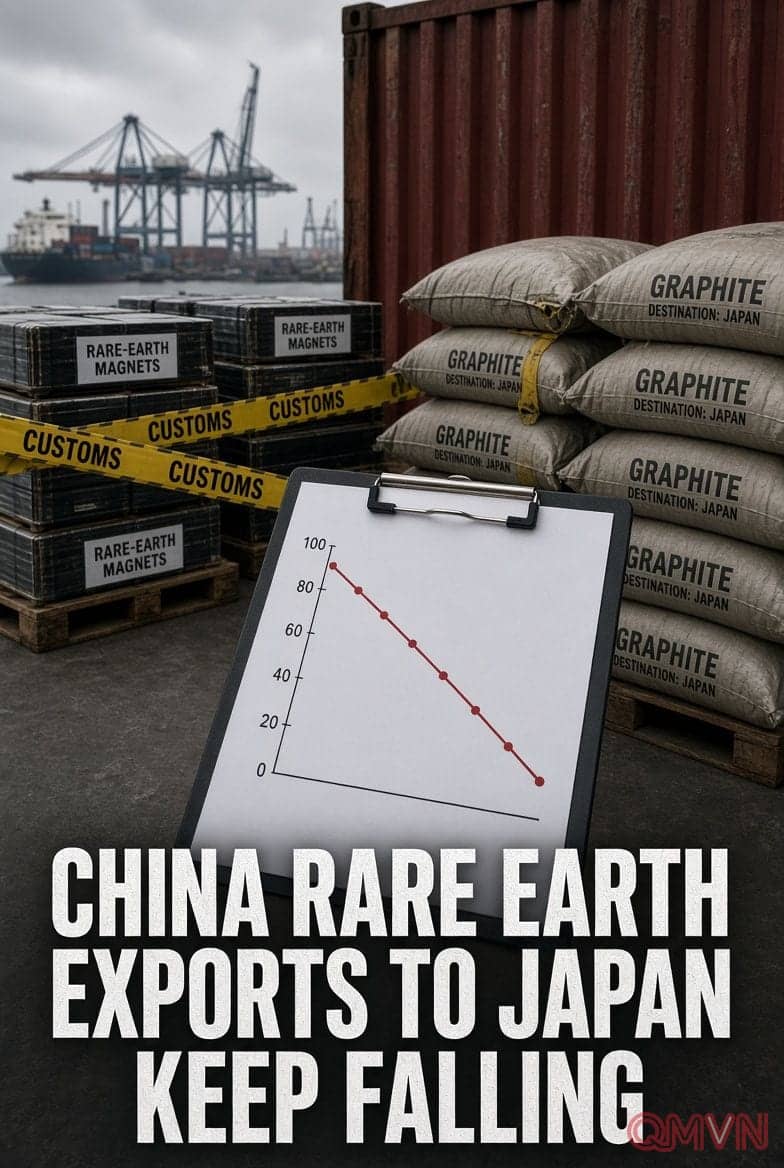
According to the South China Morning Post, using Chinese customs data, exports of rare-earth permanent magnets to Japan totalled about 212 tonnes in August, down from nearly 256 tonnes a year earlier. The 17.1% decline followed a 52.2% drop in July, suggesting companies face a prolonged disruption rather than a one-off movement.
Other categories also declined: rare-earth metals fell 11.2%, rare-earth compounds 48%, natural flake graphite 36.5%, other natural graphite 77.1% and unwrought tungsten 94.7%. These figures measure trade volume and do not by themselves establish the cause of every shipment, but they show that Japanese supply chains face greater uncertainty.
When strategic materials slow, every production line has to recalculate its own timing. - A supply-chain principle
Export Controls And Beijing-Tokyo Relations
On January 6, China banned exports of dual-use items to Japanese military users, military uses and uses contributing to Japan’s military capabilities. Reuters said the measure followed a dispute over Japanese Prime Minister Sanae Takaichi’s remarks on Taiwan. China’s commerce ministry said civilian users would not be affected.