MAIN ARTICLE
Bargain hunting in an expensive-looking setting
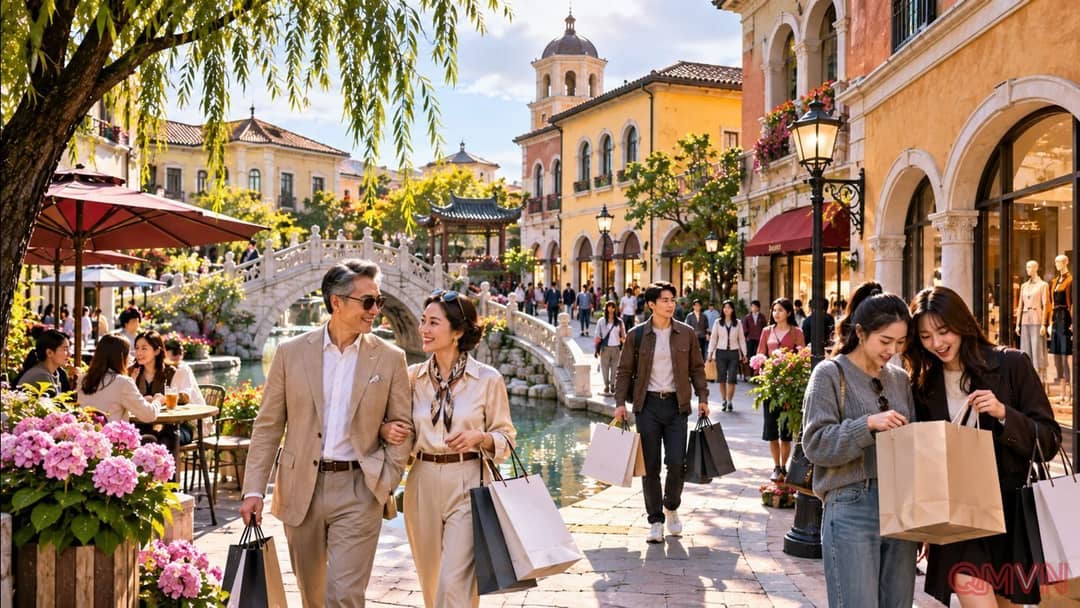
Visitors to Suzhou Village cross stone bridges and stroll past Mediterranean-style facades, designer boutiques, restaurants and recreational services. The complex belongs to The Bicester Collection, a network of 12 shopping destinations spanning Europe, China and the United States. Its architecture evokes an imaginary story of Marco Polo settling in Suzhou and leaving an Italian-inflected town behind. The commercial achievement is to turn the search for discounted merchandise into the atmosphere of a short holiday.
Desiree Bollier, a senior executive at owner Value Retail, says 2026 sales are up 43% at Suzhou Village and about 10% at Shanghai Village. Occupancy across the collection is almost complete and guests spend an average of five hours at each destination, she says. These are company-reported figures about one portfolio, not a measure of growth across China’s entire outlet industry.
China’s National Bureau of Statistics reported that consumer-goods retail sales rose only 1.1% in the first nine months of 2026. Sales at department stores and single-brand specialty stores fell 2.9% and 10.3%, respectively, among retailers covered by the figures. The contrast helps explain why physical retailers increasingly pair prices with architecture, entertainment and service to persuade shoppers to leave their phones behind.